Sep 11, 2026
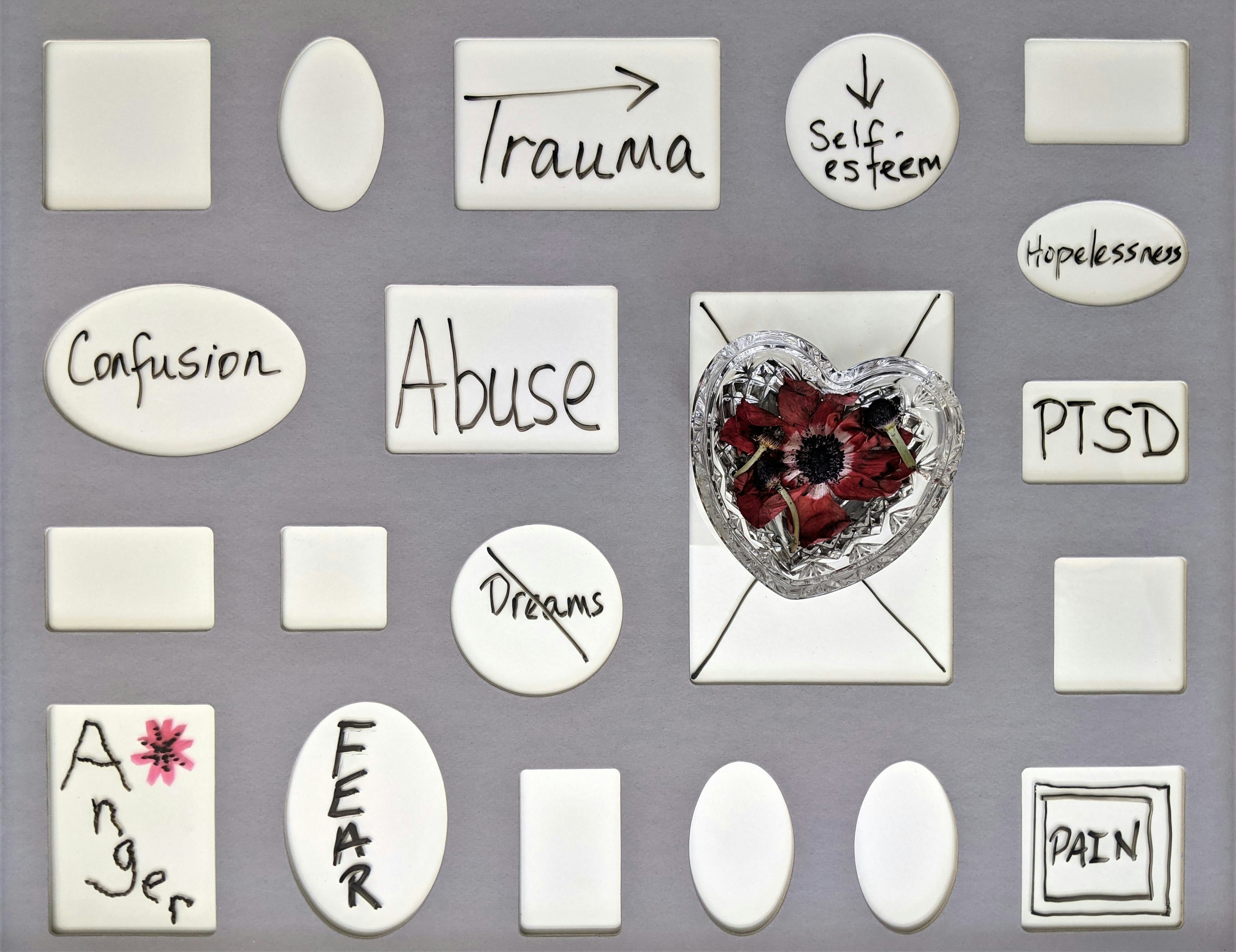
When people begin trauma therapy, they do not always arrive with a clear understanding that what they have experienced was traumatic. Some experiences are easier to identify. A serious accident, assault, sudden loss, medical emergency, or other frightening event can create a recognizable disruption in a person's life. There may be a clear understanding that something happened that was dangerous, overwhelming, or outside the boundaries of what should have occurred.
Other forms of trauma can be considerably more difficult to recognize.
When trauma is chronic, relational, or occurs throughout important developmental periods, there may be no single event to identify. Instead, the conditions surrounding the trauma may have been woven into everyday life.
For therapists working with trauma and complex trauma, this distinction matters. Acute and complex trauma can both have significant psychological and physiological effects, but the way each experience influences safety, relationships, identity, and the nervous system may be quite different.
At VOX Mental Health in Barrie, Ontario, our Registered Social Workers work with individuals experiencing trauma, PTSD, complex trauma, relationship difficulties, and other concerns that may be connected to overwhelming or prolonged life experiences. One important part of trauma-informed psychotherapy is understanding not only what happened, but also how a person learned to adapt to what happened.
Acute trauma generally refers to the psychological impact of a single traumatic event or relatively time-limited experience. There is often a recognizable beginning, middle, and end.
There was life before the event, there was the traumatic experience itself, and then there was life afterward; during which the individual and their nervous system attempt to process and integrate what occurred. Importantly, the end of the traumatic event does not necessarily mean the end of its effects.
Someone may continue to experience intrusive memories, avoidance, hypervigilance, changes in mood, sleep disruption, anxiety, physiological activation, or a diminished sense of safety long after the immediate danger has passed.
However, there is often an objective endpoint to which the nervous system can eventually orient:
Something dangerous happened. I survived it. It is no longer happening.
This can become an important component of trauma therapy and PTSD treatment.
One of the characteristics that can make acute trauma easier to recognize is that the individual often already has an established understanding that the experience was not supposed to happen:
An assault is not okay.
A serious collision is dangerous.
A sudden medical emergency is frightening.
An unexpected death profoundly disrupts ordinary life.
Although people can still minimize traumatic experiences or blame themselves for what occurred, there is often some recognition that the event itself represented a violation of ordinary expectations of safety. In this sense, acute trauma can violate an existing understanding of safety.
Complex trauma can operate differently.
Complex trauma is generally associated with repeated or prolonged exposure to threatening, destabilizing, neglectful, coercive, or emotionally unsafe experiences, particularly within relationships or environments from which a person has limited ability to escape. When these experiences occur during childhood or other significant developmental periods, their effects can become particularly difficult to distinguish from the individual's understanding of themselves and the world around them.
Rather than disrupting an established sense of normality, the traumatic conditions may have participated in defining what "normal" was. This is one reason people seeking complex trauma therapy do not always identify themselves as having experienced trauma.
There may be no single incident they can point toward. Instead, the significance may exist within a pattern that occurred repeatedly over months or years.
Not all trauma is readily visible from the outside. Complex trauma can occur within families that also contained affection, celebration, opportunity, connection, and genuine love. A child may have been fed, clothed, educated, and cared for in many respects while simultaneously living within an emotional environment that required persistent adaptation.
Perhaps one parent's emotional state determined the climate of the household.
Perhaps conflict resulted in withdrawal, intimidation, prolonged silence, or unpredictability.
Perhaps affection felt readily available when expectations were met but less predictable during disagreement.
Perhaps the child became responsible for managing an adult's emotions.
Perhaps expressing needs created tension.
Perhaps maintaining connection required accommodation, achievement, emotional suppression, or exceptional self-sufficiency.
No individual interaction necessarily appears significant enough to explain the eventual impact, the significance lies in the pattern. For someone growing up within that environment, these conditions may not register as unusual because there is no alternative experience against which to compare them. They are simply life.
Children do not typically analyze their family systems using concepts such as emotional unpredictability, parentification, attachment disruption, coercive control, or chronic relational stress. They learn how to function within the environment they have been given:
If monitoring a parent's mood reduces conflict, they learn to monitor.
If expressing needs creates tension, they may learn to minimize their needs.
If achievement produces approval, they may learn to perform.
If disagreement threatens connection, they may learn to accommodate.
If relying on others repeatedly leads to disappointment, they may become extraordinarily self-sufficient.
These responses can be remarkably adaptive within the environments in which they developed. The difficulty is that, over time, an adaptation can become so familiar that it no longer feels like something a person learned to do. It begins to feel like who they are.
This is an important area of exploration in trauma-informed therapy:
Hypervigilance may be experienced as perceptiveness.
People-pleasing may be understood as kindness.
Perfectionism may be reinforced as ambition.
Over-functioning may appear to be competence.
Emotional suppression may be interpreted as maturity.
Difficulty depending on other people may be celebrated as independence.
Sensitivity to other people's emotional states may appear to be exceptional empathy.
None of these characteristics, by themselves, indicate that someone has experienced trauma. It would be inappropriate to pathologize ordinary personality traits or assume that every highly independent, conscientious, or accommodating person has a trauma history.
The clinical question is more nuanced: What function did this pattern serve, and in what context did it develop?
For some people, the characteristic reflects personality, preference, or values. For others, there may also be an adaptive component that developed in response to earlier relational conditions. Often, both can be true.
This is something therapists working with complex trauma hear frequently. Someone may experience anxiety, perfectionism, hypervigilance, difficulty setting boundaries, emotional disconnection, relational insecurity, or chronic over-responsibility while struggling to identify anything in their history that seems sufficiently significant to explain those patterns.
They may remember loving parents.
They may have had opportunities.
They may have experienced periods of genuine happiness.
They may recognize that other people experienced circumstances that appear objectively more severe.
All of those things can be true. Understanding complex trauma does not require rewriting an entire childhood as abusive or reducing caregivers to categories of "good" and "bad." Intent and impact are different clinical questions.
People can love one another while still participating in relational patterns that have psychological consequences. Caregivers can also transmit patterns they learned within their own families without consciously intending to cause harm. For this reason, trauma therapy does not necessarily need to begin with the question:
"Was what happened bad enough to count?"
A more clinically useful question may be:
"What did I have to learn about myself, other people, relationships, and safety in order to function within that environment?"
When trauma was subtle, chronic, relational, or normalized, its impact may be easier to recognize through present-day patterns than through a specific traumatic memory. Someone may wonder why another person's disappointment feels intolerable.
Why saying no creates disproportionate guilt.
Why ordinary relationship conflict immediately feels threatening.
Why rest produces discomfort.
Why receiving help feels more difficult than providing it.
Why another person's mood immediately becomes something they feel responsible for managing.
Why small mistakes create significant anxiety.
Why they can identify everyone else's needs but struggle to articulate their own.
Rather than asking only, "Why am I like this?", trauma-informed psychotherapy can introduce a different question: "Under what circumstances might this response once have been useful?" That distinction moves the conversation away from simply identifying pathology and toward understanding adaptation.
There is another important distinction between acute and complex trauma. Following an acute traumatic experience, someone may say:
"I don't feel like myself anymore."
There may be a recognizable version of the self that existed before the traumatic event. The trauma disrupted that person's existing understanding of safety, themselves, or the world around them.
With chronic developmental trauma, there may not be an equivalent "before." If hypervigilance, accommodation, emotional suppression, perfectionism, or self-sufficiency developed gradually throughout childhood, the person may instead say:
"This is just who I am."
This is where complex trauma therapy requires considerable nuance. The objective is not to attribute every characteristic to trauma or dismantle qualities that are meaningful parts of someone's identity. Instead, therapy can help create enough distance to differentiate between preference and protection, personality and adaptation, present-day values and older survival strategies.
Both acute and complex trauma can have profound and enduring effects, but understanding the distinction is important when considering appropriate trauma treatment. Acute trauma can violate an existing understanding of safety. Complex trauma can participate in defining what safety, relationships, trust, vulnerability, and even the self came to mean in the first place.
Neither experience should be reduced to a checklist of symptoms, and neither necessarily requires the same therapeutic approach for every person.
Effective trauma therapy requires careful assessment and individualized treatment that considers the nature of the traumatic experience, developmental history, current symptoms, relational patterns, coping strategies, nervous-system responses, strengths, resources, and the person's goals for therapy.
Both acute and complex trauma require nuanced, trauma-informed intervention.
At VOX Mental Health in Barrie, we recognize that people seeking trauma therapy may arrive with very different experiences and very different understandings of what has happened to them. Some know exactly which experience brought them to therapy.
Others know only that certain patterns continue to appear in their relationships, emotions, behaviours, or sense of self and want support understanding why.
Our team of Master's-level Registered Social Workers in Barrie includes therapists with additional training and experience in trauma-informed approaches and specialized areas of psychotherapy. Our clinicians work within their individual areas of competence and scope of practice so that clients can be matched with a therapist whose training and clinical focus align with their needs.
VOX Mental Health provides in-person therapy in Barrie, Ontario, as well as virtual psychotherapy throughout Ontario, with appointments available seven days a week. If you are looking for a Barrie therapist for trauma, PTSD, complex trauma, or related mental health concerns, finding the right therapeutic fit matters.
Trauma treatment is not simply about asking what happened. Sometimes it is also about understanding what you learned because of what happened, how those adaptations helped you survive, and what you may no longer need to carry forward.
Reclaim your voice. Rewrite your story.