Jul 10, 2026
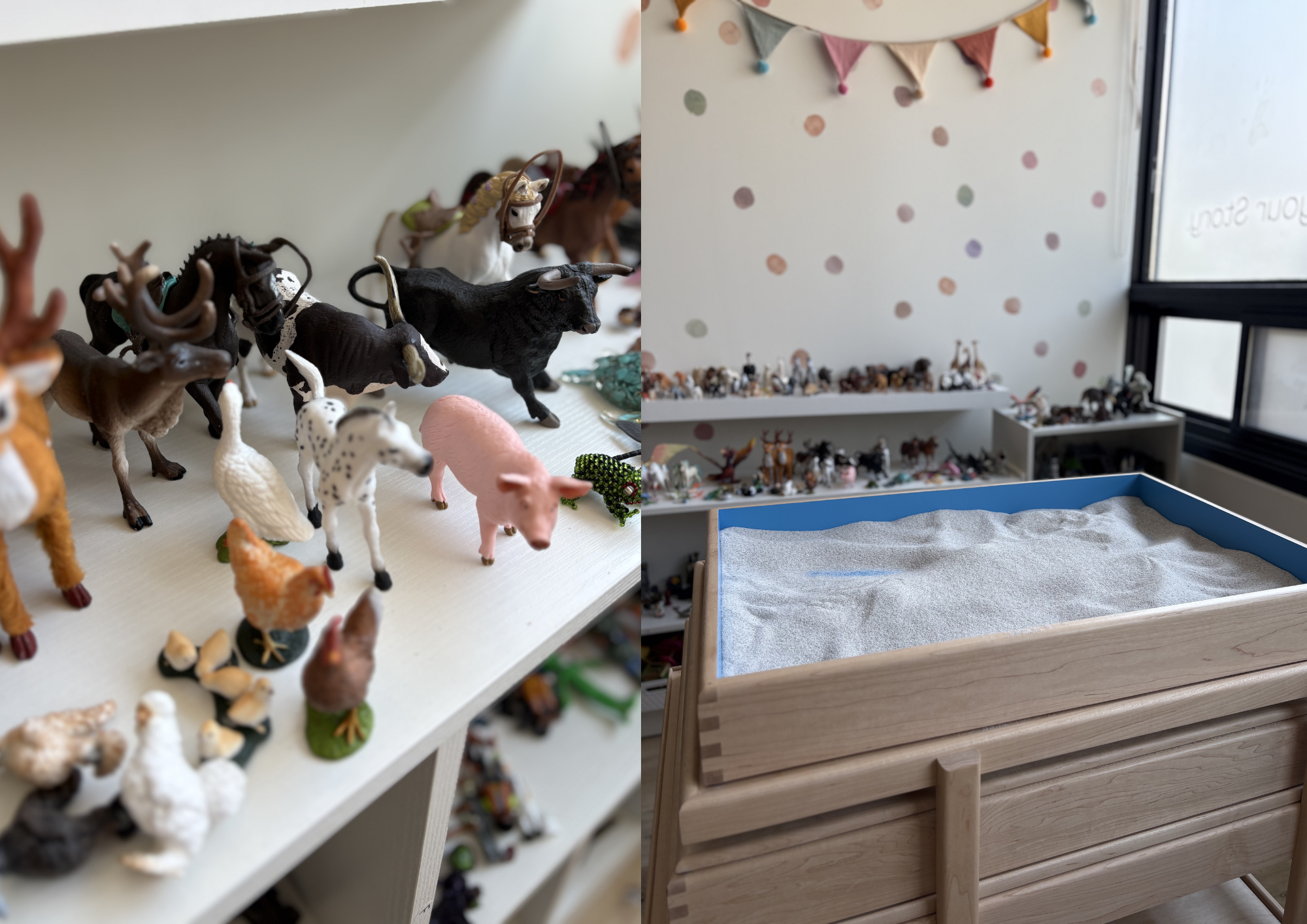
When parents first walk into a play therapy room, one of the first things they notice is the sandtray. Filled with soft sand and shelves of miniature figures, it can look more like a toy than a therapeutic intervention. It is natural to wonder: How can playing in sand possibly help my child?
The answer lies in how children communicate. Unlike adults, children often process experiences through play long before they have the language to explain them. Sandtray therapy is a developmentally appropriate, evidence-informed intervention that allows children to communicate symbolically, regulate their nervous system, and work through difficult experiences in ways that words alone cannot.
At VOX Mental Health, registered play therapists use sandtray therapy to support children experiencing anxiety, trauma, grief, family conflict, separation and divorce, neurodivergence, attachment challenges, emotional regulation difficulties, medical experiences, and significant life transitions.
Sandtray therapy is a specialized form of play therapy where children create scenes using miniature figures in a tray of sand. The tray becomes a symbolic representation of their internal world.
Rather than asking children to describe complex emotions, therapists observe the themes, relationships, movement, and stories that naturally emerge. Play becomes the child's language.
Many children lack the developmental capacity to explain overwhelming experiences.
This is because:
• Emotional vocabulary is still developing.
• Language centres of the brain continue maturing throughout childhood.
• Stress and trauma reduce access to verbal processing.
• Children often understand emotions through sensory and symbolic experiences before they can explain them cognitively.
Instead of telling us how they feel, children often show us. A child experiencing family conflict may repeatedly separate families of miniature animals. Another coping with anxiety may build protective walls or bury figures beneath the sand. These are meaningful forms of communication, not random play.
Emotionally significant experiences are not always stored as coherent verbal memories. Instead, they are frequently encoded as sensations, images, emotions, and physiological responses.
Sandtray therapy provides a bridge between these non-verbal experiences and the brain's capacity to organize them into a meaningful narrative. As children manipulate the sand, move figures, and create stories, they engage emotional and cognitive systems simultaneously, supporting regulation, integration, and resilience.
The sensory qualities of sand are therapeutic in themselves. Digging, pouring, smoothing, and burying provide calming tactile input that can reduce physiological arousal, improve attention, and help children remain emotionally regulated while exploring difficult experiences.
For many children, the sand becomes both a creative medium and a source of nervous system regulation.
Children rarely represent their experiences literally. Instead, they communicate through metaphor and symbolism.
A bridge may represent hope.
A dragon may symbolize anger.
A castle may represent safety.
A storm may represent fear.
Sandtray is also particularly helpful for helping children process transitions and change. Children navigating separation and divorce, moving between two homes, transitioning from school to home, or managing challenging social situations can rehearse these experiences symbolically before facing them in real life.
A therapist may invite a child to build two separate sandtray worlds representing different homes or environments. The child can then move miniature figures between the trays while the therapist gently reflects the emotions, challenges, and successes associated with each transition.
In other cases, a child may create one sand world and repeatedly move figures from one side to the other, exploring feelings of leaving, arriving, belonging, uncertainty, or safety.
Rather than asking, "How do you feel when you go to Dad's house?" the child's internal experience unfolds naturally through symbolic play. This indirect approach often feels safer, allowing difficult emotions to emerge without requiring the child to verbalize experiences they may not yet fully understand.
Unlike situations where children feel questioned or pressured to explain themselves, sandtray therapy gives them control. The therapist does not direct the story or assign meaning to every symbol. Instead, they follow the child's lead, creating emotional safety while supporting gradual processing.
Healing occurs through the therapeutic relationship and the child's ability to explore difficult experiences at a pace their nervous system can tolerate.
Sandtray therapy can support children experiencing:
• Trauma and developmental trauma
• Anxiety
• Separation and divorce
• Family conflict
• Grief and loss
• Medical trauma
• Attachment difficulties
• School challenges
• Social difficulties
• Autism and ADHD
• Foster care or adoption
• Major life transitions
Even children who appear to be coping outwardly may benefit from a safe space to process their internal world.
As children begin processing experiences symbolically, families often notice:
• Greater emotional regulation
• Reduced anxiety
• Better communication
• Increased confidence
• Improved relationships
• Fewer behavioural outbursts
• Better frustration tolerance
• Improved overall wellbeing
These changes occur because children no longer need to communicate distress primarily through behaviour.
Sandtray therapy meets children where they are developmentally, allowing them to explore fear, grief, change, hope, and resilience through symbolic play in the context of a safe therapeutic relationship. What looks like "playing in the sand" is, in reality, one of the most sophisticated and developmentally appropriate tools available in child psychotherapy.
If your child is struggling with anxiety, trauma, behavioural challenges, family conflict, separation or divorce, grief, neurodivergence, developmental trauma, or major life transitions, early intervention can make a meaningful difference.
At VOX Mental Health, our registered play therapists provide developmentally appropriate therapy for children ages 3 and up, using evidence-informed approaches including sand tray therapy, child-centred play therapy, attachment-informed interventions, and trauma-informed care. Every child deserves a safe place to express what they cannot yet put into words.
Whether your family is navigating a recent challenge or long-standing concerns, our team is here to help children build emotional resilience, confidence, and healthy coping skills that extend well beyond the therapy room.